New flooring changes a room more dramatically than almost any other renovation. In Hungarian homes — particularly the panel apartments and older brick buildings that make up much of the housing stock — replacing worn linoleum or damaged parquet with modern flooring is a project that most people can handle themselves with proper preparation.
Choosing Your Flooring Material
The three most common options for DIY installation in Hungary are laminate, luxury vinyl plank (LVP), and ceramic or porcelain tile. Each has distinct advantages, and the right choice depends on the room, your budget, and how much work you are willing to do.
Laminate Flooring
Laminate is the most popular DIY flooring choice in Hungary, and for good reason. Modern click-lock laminate is genuinely easy to install, looks convincing in wood-effect finishes, and costs between 3,000 and 12,000 HUF per square metre depending on quality. The major brands available in Hungary are Classen (German, sold at Diego and OBI), Kronotex (also German, widely available), and Balterio (Belgian, found at Praktiker and specialised flooring shops).
The key specification to watch is the AC rating, which indicates durability. AC3 is adequate for bedrooms; AC4 is better for living rooms and hallways; AC5 is commercial grade and overkill for residential use but practically indestructible. For most Hungarian apartments, AC4 in the living areas and AC3 in the bedrooms is the sensible choice.
Laminate's main limitation is its intolerance of standing water. It should not be used in bathrooms, and kitchens require careful attention to sealing the joints near the sink and dishwasher. Some premium laminate products (such as Classen NEO 2.0) use water-resistant core materials that handle occasional moisture better, but these cost significantly more.
Luxury Vinyl Plank (LVP)
Vinyl plank flooring has improved enormously in recent years and is now a serious alternative to laminate. It is fully waterproof, quieter underfoot, and available in convincing wood and stone finishes. Prices range from 4,000 to 15,000 HUF per square metre in Hungarian stores.
The better products use a rigid SPC (stone polymer composite) core that resists denting and temperature changes. Brands available in Hungary include Arbiton (Polish, good value), Wineo (German, mid-range), and Quick-Step Livyn (premium). Diego has the widest selection in their physical stores, and their staff are generally knowledgeable about the products.
LVP is particularly well-suited to Hungarian panel apartments because it adds minimal height to the floor (typically 4 to 5 mm plus underlay), works well over the slightly uneven concrete subfloors common in these buildings, and provides excellent sound dampening — an important consideration when you share walls and ceilings with neighbours.
Ceramic and Porcelain Tile
Tile is the most durable and water-resistant option, making it the natural choice for bathrooms, kitchens, and entrance halls. Installation is more labour-intensive than laminate or vinyl, but the result is permanent and requires virtually no maintenance beyond cleaning.
Porcelain tile is denser and more water-resistant than ceramic and is the better choice for high-traffic areas and anywhere water is present. In Hungary, the Zalakeremia factory produces a range of affordable porcelain tiles, and imported Italian and Spanish tiles are available at specialist shops like Casa della Pietra in Budapest.
Expect to pay 3,500 to 15,000 HUF per square metre for tile, plus adhesive, grout, and significantly more time for installation compared to floating floors.
Preparing the Subfloor
Proper preparation is the difference between flooring that looks good for a decade and flooring that develops problems within months. In Hungarian apartments, the subfloor is typically concrete screed, sometimes with an existing floor covering on top.
Removing the Old Floor
Old linoleum or vinyl can usually be peeled up and scraped away. If adhesive residue remains, use a floor scraper or a chemical adhesive remover. Old parquet that is nailed or glued may require more effort — a rented floor scraper from OBI speeds up this process considerably.
If the existing floor is level, clean, and in reasonable condition, you can sometimes install floating flooring directly over it. Laminate and LVP can go over old vinyl or linoleum provided the surface is flat and firmly adhered. Tile should always be installed on bare concrete for proper adhesion.
Levelling
Check the floor for flatness using a long straight edge or spirit level. The tolerance for laminate and vinyl is 2 mm over 2 metres. Concrete subfloors in Hungarian panel apartments often exceed this, particularly near doorways and along the walls.
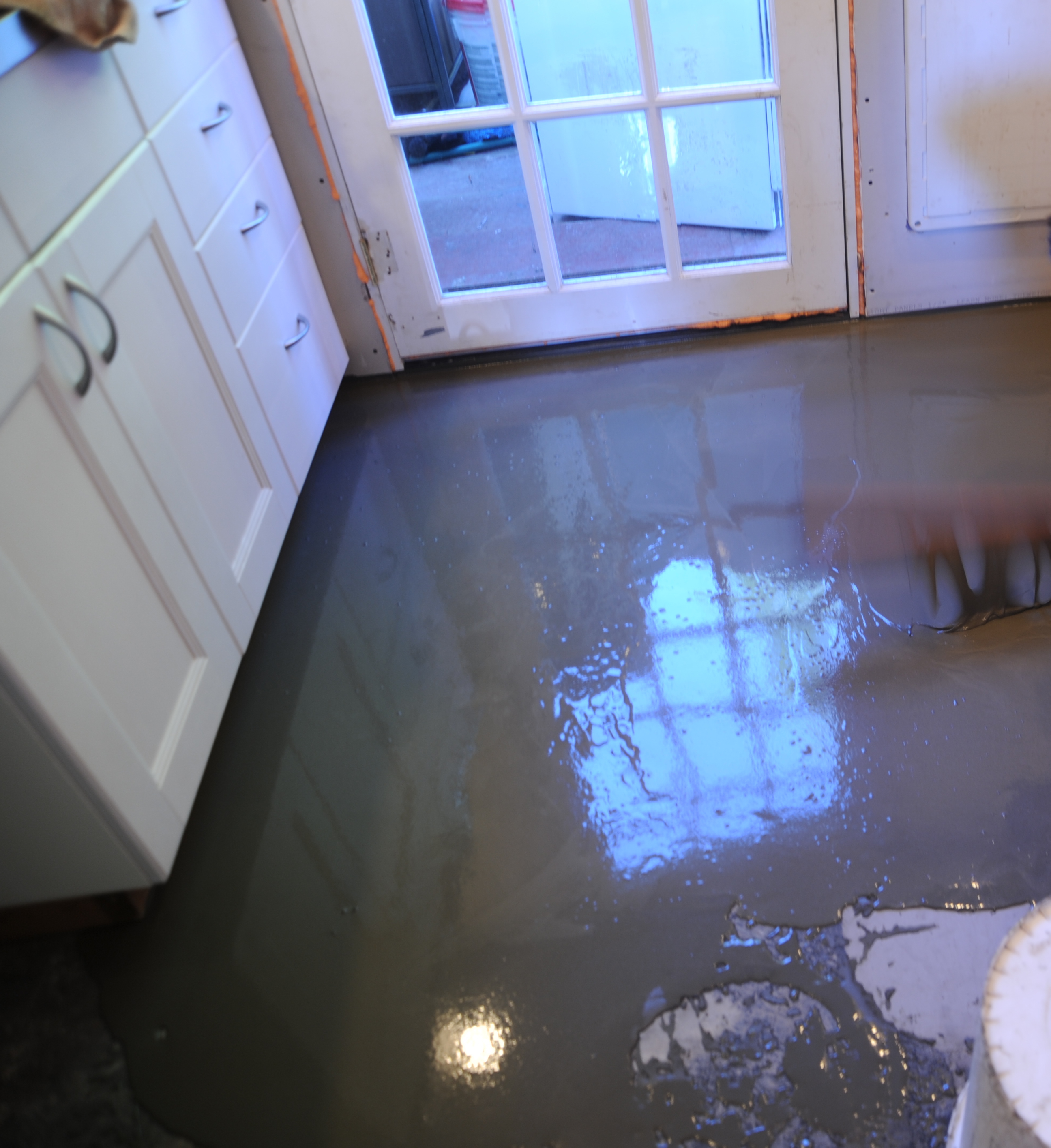
For minor dips and unevenness, a self-levelling compound is the most effective solution. Weber.floor 4150 and Ceresit CN 69 are both available in Hungary and work well. Mix the compound according to the instructions, pour it onto the floor, and it will find its own level. One bag typically covers 1 to 2 square metres at a standard thickness.
Allow the levelling compound to cure fully before installing the floor — at least 24 hours for most products, longer for thick applications. Check the manufacturer's instructions for the specific drying time before covering with a floor.
Installing Laminate Flooring
Acclimatise the laminate in the room where it will be installed for at least 48 hours before starting. Stack the unopened packs in the room to allow the material to adjust to the temperature and humidity.
Lay the underlay first. A basic PE foam underlay works for most situations; for panel apartments with neighbours below, a thicker underlay with sound-dampening properties (such as Arbiton Multiprotec Acoustic 3 in 1) is a worthwhile investment. Tape the underlay seams with adhesive tape to prevent shifting.
Start along the longest straight wall, placing 8 to 10 mm spacers between the flooring and the wall to allow for expansion. Click the planks together end-to-end for the first row, then start the second row with a cut piece at least 30 centimetres long to stagger the joints. This staggering is both structural and visual — uniform joint lines look artificial and are weaker.
Cut planks with a mitre saw, a circular saw, or even a sharp utility knife and straight edge for cross-cuts. For the final row, measure the width needed at several points (walls are rarely perfectly straight) and cut accordingly.
Install transition strips at doorways between rooms and between different flooring types. T-mouldings and reducer strips are available to match most laminate colours at OBI and Diego.
Installing Luxury Vinyl Plank
The process is similar to laminate but with a few differences. Vinyl plank does not require a separate underlay if the product has an integrated backing — many SPC vinyl planks include a cork or IXPE layer on the bottom. If yours does not, use a thin PE foam underlay.
Vinyl is more flexible than laminate, which makes it easier to work with but also more sensitive to subfloor imperfections. Any debris or bumps under the vinyl will telegraph through the surface and be visible. Vacuum and clean the subfloor thoroughly before installation.
Cutting vinyl plank is simpler than laminate. Score the surface with a utility knife along a straight edge, then snap the plank along the scored line. No power tools needed for straight cuts, which makes this a quieter and less dusty process than laminate installation.
Installing Floor Tiles
Tile installation is more involved but follows a logical sequence. Plan the layout first by dry-laying tiles from the centre of the room outward to determine where cuts will fall. Adjust the starting point so that no edge tile is narrower than half a tile width — very narrow cut tiles look poor and are difficult to cut cleanly.
Apply tile adhesive to the floor using a notched trowel. For tiles larger than 30x30 cm, also apply a thin layer of adhesive to the back of the tile (this is called back-buttering and ensures full coverage). Press each tile into the adhesive with a slight twisting motion and check the level immediately.
Use a tile levelling system for large-format tiles. These plastic clips and wedges ensure adjacent tiles sit flush with each other, preventing lippage — the slight height difference between tiles that catches toes and looks unprofessional. Tile levelling systems are available at Praktiker and cost between 3,000 and 5,000 HUF for enough clips to cover 15 to 20 square metres.
Allow 24 hours for the adhesive to cure before grouting. Use a flexible grout for floor applications and apply it with a rubber float. Clean the tile surfaces with a damp sponge before the grout fully hardens.
Cost Comparison per Square Metre (Hungary, 2026)
- Laminate (AC4, good quality): 5,000 - 9,000 HUF
- Luxury Vinyl Plank (SPC core): 6,000 - 12,000 HUF
- Porcelain Tile (with adhesive and grout): 6,000 - 18,000 HUF
- Underlay (for floating floors): 500 - 1,500 HUF
- Self-levelling compound (per bag): 3,500 - 6,000 HUF
For technical specifications and installation guidelines on self-levelling compounds and tile adhesives, Weber Hungary provides detailed product data sheets with recommended application thicknesses and drying times for all their flooring preparation products.